

I am yet to meet a parent who talks positive about video games. The moment discussions start the words like epilepsy, eye sight loss, wastage of time and online frauds etc starts echoing around.
I met a family who bought a PS5 for their child not out of love, but because they can monitor and observe what kind of games he is playing. It’s not the playing which is troublesome, but it was the secretive playing and the grey areas in online gaming which were troubling that family. And why not! Recently I read in news that a child committed suicide on losing contact with his online gaming friend.
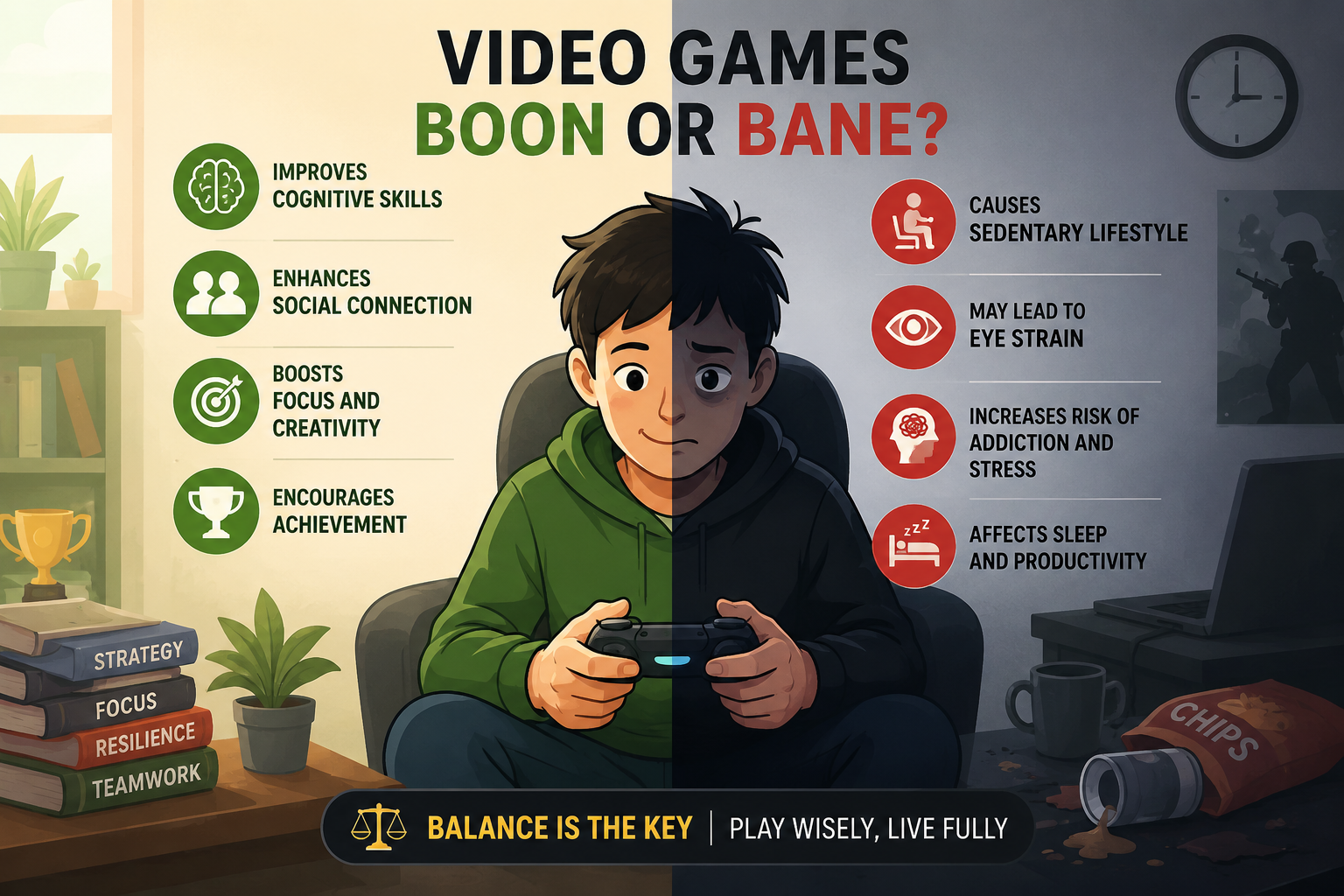
But is it really true that there is no flip side to this gloomy picture. Playing video games is not really about entertainment; when played responsibly, it can help develop useful skills and teach valuable lessons. Many games like ROBLOX and Minecraft require players to think quickly, make their own decisions, and solve problems. Games like MINECRAFT help improve creativity by requiring players to build, design, and create their own imaginary worlds. They mainly teach us teamwork, especially in multiplayer games where gamers are required to cooperate, communicate, and work to achieve a common aim. These skills may be helpful in school projects and school life. The interface of video games and the effects may motivate students to take graphic designing and coding as a career.
Educational games like BrainPOP can make learning interesting and more enjoyable. Boring subjects like history, maths and geography can become easier when presented interactively.
But as they rightly say science is a boon or a bane. Playing too much can be unhealthy for the brain and can distract students from studies, sleep, exercise and from spending time with family. The key to avoiding this is mainly balance, where students can equally manage entertainment along with studies.
In conclusion, video games can be much more than simple entertainment. When chosen carefully and played in moderation, they can help us learn, think creatively, solve problems, and work with others. It is not gaming itself that matters most, but how we choose to use it.